Thinking about buying your first rental property in Princeton, NC? It can feel exciting and a little intimidating at the same time, especially when you are trying to balance home prices, rent potential, taxes, zoning, and landlord rules. The good news is that Princeton is a small market with fairly straightforward fundamentals, and if you understand the numbers and local setup, you can make a smarter first move. Let’s dive in.
Princeton Rental Market Basics
Princeton is a very small market in Johnston County, which shapes how you should view a rental purchase here. According to 2024 local government indicators from NC DEQ, Princeton has 1,471 residents, a median household income of $34,315, an unemployment rate of 3.3%, and total appraised value of $103.8 million.
Recent Zillow market data shows an average rent of $1,500 in Princeton, with a rent range of $995 to $2,125 and only 7 available rentals. Zillow also shows an average home value of $279,552 and 26 homes for sale. For a beginner, that points to a modest-entry market where small inventory can matter just as much as price.
This is not the kind of place where you should assume rapid rent jumps or endless inventory. Instead, Princeton looks more like a market where careful buying, steady long-term planning, and conservative rent estimates matter most.
Why Princeton Can Work for Beginners
A first rental often goes best when the market is easier to understand. Princeton’s smaller size and standard housing stock can make it simpler to evaluate than a larger, faster-moving area with more complex competition.
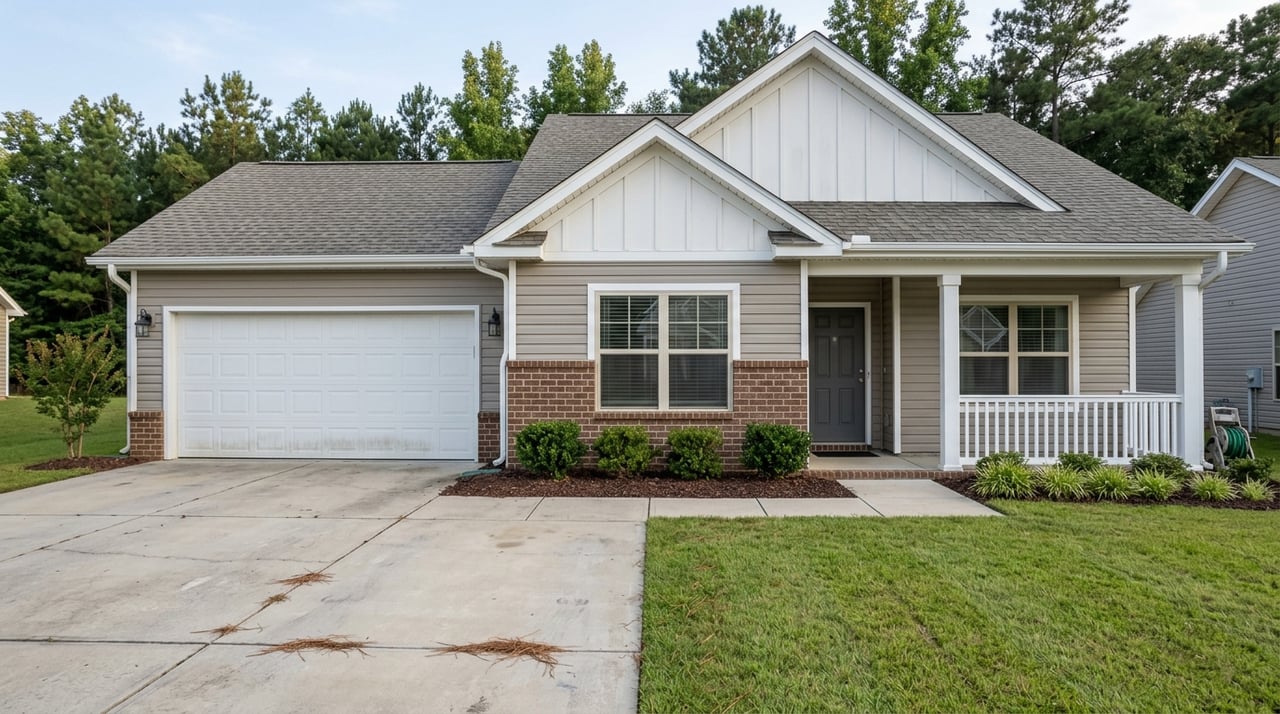
The local rental examples support that idea. Recent asking rents included a 3-bedroom, 2-bath house at $1,585, a 3-bedroom, 1-bath house at $1,100, and a 2-bedroom, 2-bath house at $1,575. Those examples suggest that standard single-family homes are a practical starting point in Princeton.
For many first-time investors, that is helpful. You are not trying to learn a luxury apartment market or underwrite a large multifamily project. You are more likely looking at a basic house with a simpler leasing and maintenance profile.
Property Types to Consider First
Princeton’s zoning ordinance breaks residential land into several districts, including R1 rural residential, R2 low-density residential, R3 medium-density residential, R4 multifamily residential, and R5 mobile home park districts. The town states that R1 and R2 are intended for low-density single-family living, R3 allows single-family and two-family housing, R4 is for multifamily housing, and R5 is for mobile home parks.
For a beginner, the easiest path is often a detached single-family home in a low-density district. A small two-family property may also be worth considering where zoning allows it, but that usually adds a little more complexity to underwriting and management.
If the property is inside town limits or in an ETJ, the zoning permit comes from the town planning office. Johnston County also notes that public water and sewer hookups require county utilities approval when those systems are involved. That makes zoning and utility confirmation an important early step before you commit.
Best beginner fit in Princeton
If you want to keep your first deal simple, focus on properties with:
- straightforward residential zoning
- clear utility access
- standard single-family layouts
- durable condition with fewer immediate repairs
- rent levels supported by nearby comparable listings
That approach fits the way Princeton’s market currently behaves. It also gives you a better chance of avoiding avoidable surprises in your first year of ownership.
What Taxes Mean for Your Budget
One of the biggest mistakes beginner investors make is focusing only on purchase price and rent. Property taxes matter, and in Princeton you need to account for both town and county taxes.
Princeton’s 2025 municipal tax rate is $0.585 per $100 of assessed value. Johnston County’s 2025 tax rate is $0.52 per $100, with a county fire district rate of $0.115 where applicable. On a $300,000 assessed value, that works out to about $1,755 in town tax and $1,560 in county tax before any fire district levy.
Johnston County says its 2025 revaluation was effective January 1, 2025. That means assessed values may not match older expectations, so your underwriting should use current tax figures and current assessed value information whenever possible.
Simple budgeting categories
Before you buy, build a budget that includes:
- mortgage payment if financing applies
- town and county property taxes
- insurance
- repairs and ongoing maintenance
- vacancy allowance
- utility setup or utility responsibility
- leasing or turnover costs
Princeton’s public works department handles water and wastewater operations as well as trash and recycle pickup. That means utility setup should be part of your move-in planning and your monthly cost review.
How to Think About Rent Potential
It is easy to overestimate rent when inventory is tight, but that can create problems later. In a smaller market like Princeton, a conservative rent estimate is usually the smarter move.
With an average rent of $1,500 and a home value of $279,552, Princeton offers a rough gross rent-to-price ratio of about 6.4% based on the research provided. That is a gross figure only, so it does not include taxes, insurance, maintenance, vacancy, or financing costs.
That number does not make Princeton the highest-yield market nearby. Still, it does suggest a lower buy-in market where a steady, long-term cash flow approach may be more realistic than chasing aggressive appreciation or top-of-market rents.
Princeton vs Nearby Towns
Comparing nearby towns can help you decide whether Princeton fits your investment goals. If your priority is the lowest possible buy-in, Princeton may be appealing. If your goal is maximizing gross rent-to-price ratio, another nearby town may deserve a closer look.
| Town | Avg. Home Value | Avg. Rent |
|---|---|---|
| Princeton | $279,552 | $1,500 |
| Wilsons Mills | $279,129 | $1,657 |
| Smithfield | $296,276 | $1,756 |
| Four Oaks | $314,226 | $1,899 |
| Selma | Not provided | $1,550 |
| Clayton | $366,618 | 3-bedroom rents around $1,895 to $2,237 |
Using the research figures, rough gross rent-to-price ratios are about 6.4% for Princeton, 7.1% for Smithfield, 7.3% for Four Oaks, and 7.1% for Wilsons Mills. Princeton may not be the strongest yield story in the immediate area, but it does offer a relatively approachable price point and a simpler small-town operating environment.
That tradeoff matters. For some beginners, a simpler first property is worth more than chasing the highest possible ratio on paper.
Landlord Rules You Need to Know
Before you become a landlord in Princeton, you should understand North Carolina’s basic landlord-tenant rules. The landlord must keep the home in safe and habitable condition, comply with building and housing codes, make needed repairs, keep common areas safe, maintain required fixtures and appliances, and provide working smoke alarms.
Tenants must pay rent, keep their space clean and safe, dispose of garbage properly, avoid damage, and give written notice when repairs are needed. North Carolina’s landlord-tenant materials also recommend following up repair requests in writing and keeping copies.
That written paper trail is important for beginners. Good records can make repairs, deposit accounting, and communication much easier if questions come up later.
Security deposit limits in North Carolina
North Carolina limits how much you can collect for a security deposit:
- Week-to-week lease: up to 2 weeks’ rent
- Month-to-month lease: up to 1.5 months’ rent
- Longer lease term: up to 2 months’ rent
Permitted uses for the deposit include nonpayment of rent and certain utility charges, property damage, failure to complete the lease term, unpaid bills that become a lien, re-renting costs, storage after eviction, court costs, and certain fees.
In general, landlords must account for the deposit within 30 days after the tenancy ends. If all damage cannot yet be determined, an interim accounting can be provided, with a final accounting due no later than 60 days after the tenancy ends.
Fair Housing and Screening Basics
Fair housing rules apply to every rental owner. It is illegal to discriminate in renting or buying housing because of race, color, national origin, religion, sex, familial status, or disability.
For a beginner landlord, that means your screening process should be consistent and documented. Use the same standards for every applicant, keep your communication professional, and focus on lawful, objective rental criteria.
If you are thinking about a property that would be rented for fewer than 90 days, that falls under the Vacation Rental Act instead of the long-term rental framework covered here. If your plan is a standard long-term rental, make sure your lease, deposit handling, and property condition align with the long-term rules.
A Smart Beginner Strategy for Princeton
In a market like Princeton, your first win is usually not buying the flashiest property. It is buying a durable property at a manageable price, with realistic rent expectations and clear zoning and utility answers.
A practical beginner strategy often looks like this:
- Target a standard single-family house.
- Confirm zoning before you move forward.
- Verify utility setup and any water or sewer approvals.
- Underwrite taxes using current rates and assessed value.
- Estimate rent conservatively using current local examples.
- Set aside reserves for repairs, vacancy, and turnover.
- Follow North Carolina deposit and habitability rules carefully.
That mindset fits Princeton well. The research points more toward steady, conservative cash flow planning than a fast appreciation thesis.
If you want help comparing homes in Princeton or looking at investment-friendly options across Johnston County, Thomas Parker offers local, hands-on guidance rooted in the market realities that matter most.
FAQs
What is the average rent in Princeton, NC for a beginner investor to know?
- Recent Zillow data in the research report shows an average rent of $1,500 in Princeton, with a range from $995 to $2,125.
What property type is best for a first rental property in Princeton, NC?
- For many beginners, a detached single-family home is the simplest starting point because Princeton’s zoning and rental examples point to standard houses as a practical fit.
What taxes should you budget for a rental property in Princeton, NC?
- You should budget for Princeton town taxes, Johnston County taxes, and possibly a county fire district levy where applicable, along with insurance, repairs, vacancy, and other ownership costs.
What are the North Carolina security deposit limits for Princeton landlords?
- North Carolina allows up to 2 weeks’ rent for week-to-week leases, 1.5 months’ rent for month-to-month leases, and 2 months’ rent for longer lease terms.
Is Princeton, NC the highest-yield rental market near Smithfield?
- Based on the research report’s gross rent-to-price figures, Princeton is not the highest-yield market among the nearby towns compared, but it may offer a relatively lower buy-in and a simpler small-town operating environment.
What should you verify before buying a rental property in Princeton, NC?
- You should verify zoning, utility access, current tax impact, realistic rent potential, and the property’s repair needs before moving forward.
