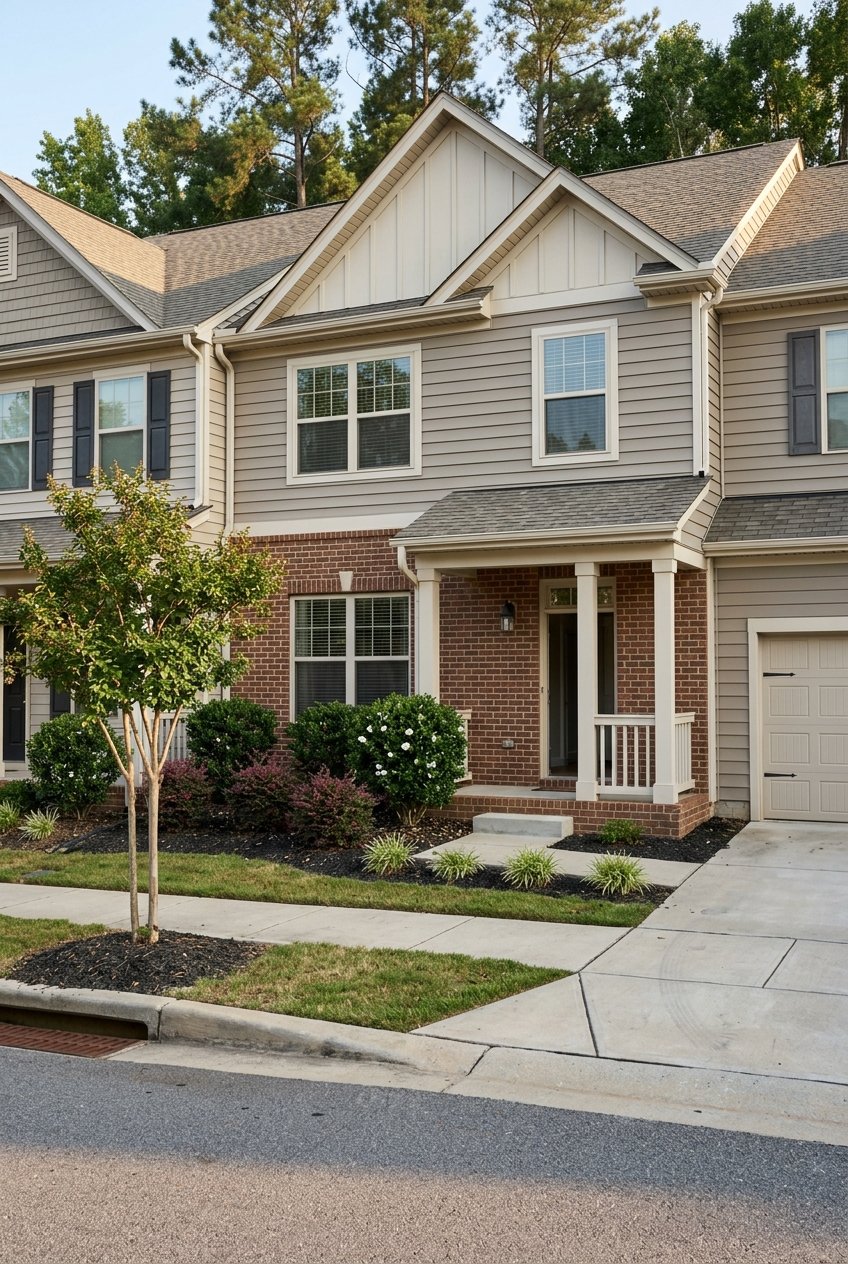
Wondering if you can spend less time on yard work and more time enjoying Smithfield? If you like the idea of easier upkeep but still want to own a home, low-maintenance living may be worth a closer look. In Smithfield, that usually means comparing townhomes, condos, and single-family homes through the lens of cost, convenience, and day-to-day responsibility. Let’s dive in.
Why low-maintenance living matters in Smithfield
Smithfield offers a mix of housing types, which makes it a practical place to compare attached and detached homes. The town had 11,292 residents in the 2020 Census, and Census estimates for 2020 to 2024 show a median owner-occupied home value of $242,500 in Smithfield, compared with $305,600 across Johnston County.
That difference helps explain why buyers here often see a broader range of home styles and price points. It also supports a more balanced conversation about what you gain when you choose a home with less exterior maintenance.
Low-maintenance living in Smithfield is not just about avoiding chores. It is more about shifting responsibility from mowing, exterior care, and shared-area upkeep to HOA rules, monthly dues, and document review.
What low-maintenance living usually means
In practical terms, low-maintenance living often refers to homes where some exterior or common-area responsibilities are shared. That can include townhome communities with owners associations or condo communities with common elements maintained collectively.
In Smithfield, townhomes are the most visible attached-home option in current planning materials. Town documents reference projects like Heritage Townes at Waddell and Waddell Drive Townhomes, which shows that townhouse development is an active part of the local conversation.
That does not mean attached homes dominate the market. Consumer portal snapshots show many more single-family homes than attached options in Smithfield today, with Realtor.com surfacing 24 townhomes and 262 single-family homes within town boundaries, while Zillow showed 3 condo listings at the time of the snapshot.
Townhomes vs condos vs single-family homes
Choosing the right fit starts with understanding that style and ownership are not always the same thing. A home may look like a townhome from the street, but the legal structure behind it can affect maintenance, insurance, and what you actually own.
Townhomes in Smithfield
A townhome often appeals to buyers who want less yard work and a more compact footprint. In many cases, townhomes are part of a planned community with an HOA that manages shared spaces or certain exterior responsibilities.
Under North Carolina law, many planned communities are governed by Chapter 47F. In this setup, a townhome owner may own the home and lot, while the association manages specific common areas and community obligations set by the recorded covenants.
Condos in Smithfield
Condos are less common in Smithfield based on current portal snapshots. Under North Carolina law, condominiums are governed by Chapter 47C and involve individual units plus common elements owned collectively by the unit owners.
That ownership structure matters because condo living often involves more shared property and more detailed association documents. If you are considering a newly offered condominium, state law requires a public offering statement that includes project documents, the association budget, and current or future fees tied to common elements.
Single-family homes in Smithfield
A single-family home usually gives you more direct control over the exterior, the yard, and future changes. That can be a strong fit if you want privacy, more storage, or space to spread out.
The tradeoff is that more maintenance often stays on your plate. You may have fewer community rules, but you also take on more responsibility for the lawn, roof, siding, and other exterior needs.
The real tradeoff: time versus control
For many buyers, the biggest decision is not attached versus detached. It is whether you want to trade some control for convenience.
A low-maintenance community can reduce the time you spend on yard work and shared upkeep. At the same time, HOA dues add to your monthly housing cost, and association rules may limit exterior changes or require approval before you make them.
That is why the best question is not “Does this home have an HOA?” The better question is “What does the HOA actually cover, and what responsibilities still belong to me?”
What to review before you buy
In North Carolina, HOA review should be a key part of your due diligence. The North Carolina Department of Justice advises buyers to get the bylaws and covenants, understand the association’s rights and powers, and ask how fees can change.
If you are comparing townhomes or condos in Smithfield, focus on the details that affect your budget and flexibility. Before you make an offer, review:
- Regular HOA dues
- Any history or risk of special assessments
- What services are included in the dues
- Contact information for the association
- Approval rules for exterior changes
- Any rental restrictions or occupancy rules in the governing documents
North Carolina law also requires sellers in applicable residential transactions to provide a Residential Property Disclosure Statement and an Owners Association and Mandatory Covenants Disclosure Statement. In most one- to four-unit residential sales, these disclosures are provided before an offer is made.
How to compare the monthly cost
A lower-maintenance home can simplify your routine, but it does not always lower your total monthly cost. To compare options clearly, look beyond the mortgage payment.
Smithfield’s ACS data offer a helpful baseline. Median selected monthly owner costs are $1,521 with a mortgage and $485 without a mortgage in Smithfield, compared with $1,665 with a mortgage across Johnston County.
When you compare homes, build your own full monthly estimate that includes:
- Mortgage payment
- Property taxes
- HOA dues
- Homeowners insurance
- Utilities
- Expected maintenance or upkeep costs not covered by the HOA
This side-by-side approach can help you see whether a townhome truly fits your budget better than a detached home. In some cases, the HOA fee offsets work and expenses you would otherwise handle yourself. In other cases, a single-family home may give you more value if you do not mind the upkeep.
Who might be a good fit
Low-maintenance living is not one-size-fits-all. In Smithfield, it can make sense for several types of buyers depending on lifestyle and priorities.
Downsizers who want less upkeep
If you are ready to simplify, a townhome may help you cut back on lawn care and exterior tasks. That can free up time while still giving you the benefits of homeownership.
Commuters who value convenience
Smithfield’s location supports buyers who want access without needing a large lot. Town materials show access from I-95 Exit 95 and the US 70 corridor, and town planning material places Smithfield about 25 miles from Raleigh.
For some buyers, that makes a lower-maintenance home appealing because it supports a lock-and-leave lifestyle. Less time spent on home upkeep can be especially helpful if your week already includes a commute.
Move-up buyers rethinking yard size
Not every move-up buyer wants more land. Some want newer finishes, functional space, and a manageable exterior instead of a larger yard that demands more weekend work.
A townhome can be worth considering if your priority is convenience over acreage. That is especially true if you want to stay focused on location, layout, and monthly predictability.
Why Smithfield supports this lifestyle
Smithfield has local amenities that strengthen the case for lower-maintenance living. The Buffalo Creek Greenway stretches 2.94 miles and connects Historic Downtown with northern and southern historic residential neighborhoods.
The town is also home to the 71,000-square-foot SRAC indoor recreation and aquatics facility. On top of that, town planning work is studying downtown traffic, parking, and bicycle and pedestrian improvements.
Together, these features support a practical lifestyle argument. If you can trade some yard work for easier access to downtown, recreation, and community infrastructure, a low-maintenance home may fit your goals well.
A smart way to shop in Smithfield
Because Smithfield has fewer attached-home options than detached homes, it helps to stay flexible and informed. You may need to compare several ownership structures, review HOA documents carefully, and weigh lifestyle benefits against monthly cost.
That is where local guidance matters. A townhome that looks simple on the surface may come with very different rules, fees, or maintenance responsibilities than another attached home across town.
If you are exploring townhomes or other low-maintenance options in Smithfield, working with a local team can help you compare what is actually available, what the documents say, and how each choice fits your long-term plans. When you are ready to talk through your options, connect with Thomas Parker for local, personalized guidance.
FAQs
What does low-maintenance living mean in Smithfield, NC?
- In Smithfield, low-maintenance living usually means owning a townhome or condo, or sometimes a single-family home in a community where an HOA handles certain shared or exterior responsibilities.
Are townhomes common in Smithfield, NC?
- Townhomes are a visible part of current Smithfield planning activity, but the market still has many more single-family homes than attached options based on current consumer portal snapshots.
What is the difference between a Smithfield townhome and a Smithfield condo?
- A Smithfield townhome may be part of a planned community with an HOA, while a Smithfield condo is typically a unit within a condominium regime where common elements are owned collectively by unit owners under North Carolina law.
What HOA documents should you review before buying in Smithfield, NC?
- You should review the bylaws, covenants, dues, services covered by the HOA, possible special assessments, association contact information, and any approval rules for exterior changes.
Are HOA fees worth it for a Smithfield low-maintenance home?
- HOA fees can be worth it if the services covered match your lifestyle needs, but you should compare dues, upkeep savings, and any restrictions before deciding.
Who is a good fit for a low-maintenance home in Smithfield, NC?
- Buyers who may benefit most include downsizers, commuters, and anyone who values convenience, shared upkeep, and access to local amenities over having a larger yard.
